Methylparaben: Past, Present, and Future in Chemical Manufacturing
Historical Development
Methylparaben started turning heads in the early 1920s, after scientists recognized the antimicrobial power of parabens. The search for preservatives that did not spoil the product or endanger people’s health dominated that era. Synthetic chemistry had just moved into the pharmaceutical and cosmetic spheres, and methylparaben helped solve new problems. In those days, food spoiled easily and medicines degraded quickly, driving innovation. Our early predecessors, working with glassware and simple distillation setups, understood the need for a preservative that wouldn’t break down easily or leave an odor. Over decades, as analytical techniques improved, so did the confidence in the compound’s purity, consistency, and safety.
Product Overview
As a company with decades of experience in paraben chemistry, we know methylparaben through regular large-batch production runs and scale-ups. The majority of trade understands methylparaben as a white, crystalline powder or sometimes a fine, colorless granule. Its notable trait: high performance at low concentrations. We see it everywhere from personal care to over-the-counter medications. Our own plant lines supply many of the world’s major health and beauty names, because they demand steady, batch-consistent methylparaben that will keep creams, shampoos, and even eyedrops from spoiling or turning rancid.
Physical & Chemical Properties
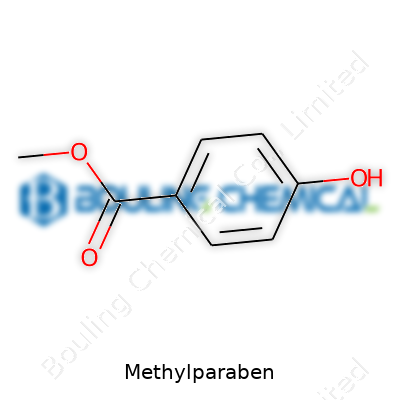
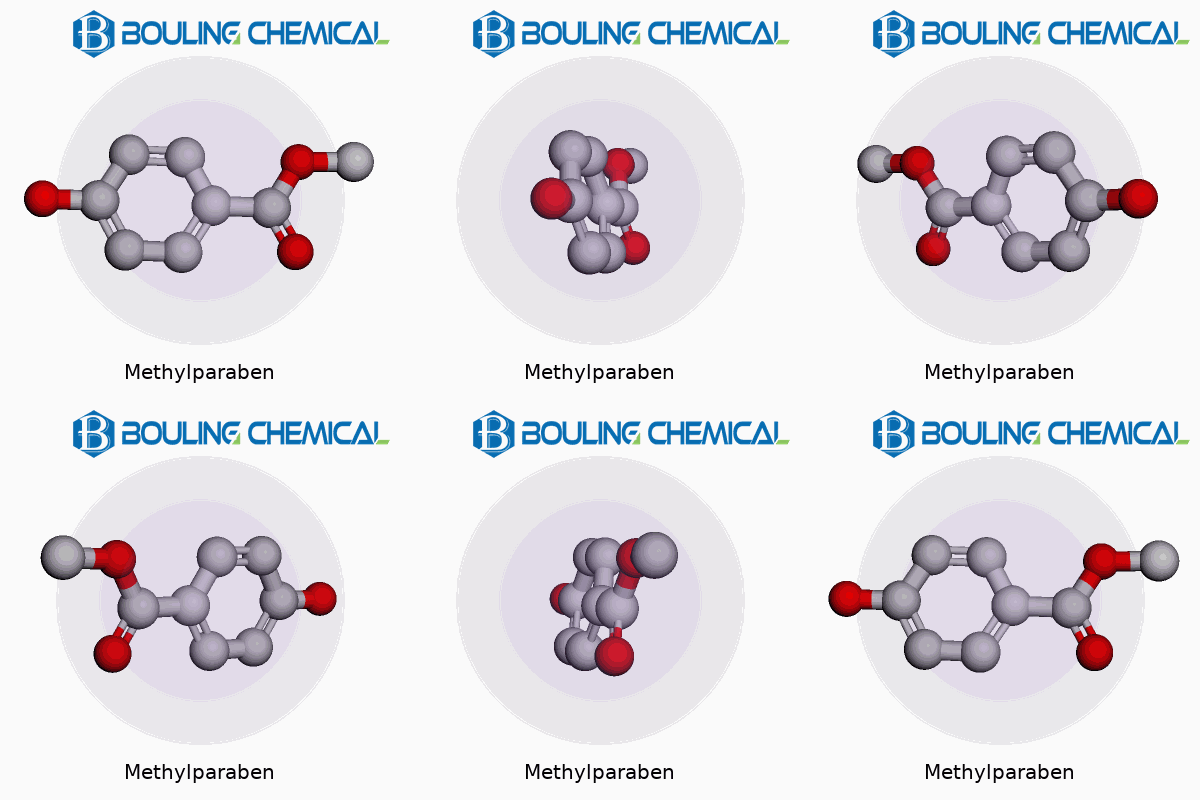
You learn a lot about a molecule when you synthesize, store, and ship thousands of tons every year. Methylparaben carries a faint odor, a sharp melting point near 125°C, and dissolves easily in alcohol and ether but poorly in cold water. Its chemical formula, C8H8O3, and its low reactivity toward bases and acids allow reliable blending. The molecular integrity holds up under regular storage conditions, so long as exposure to direct sunlight and excess humidity gets controlled. Chemical stability remains critical to customers, especially for those producing sterile products or working in high-throughput manufacturing. Our production lines keep carefully controlled packaging atmospheres as a result.
Technical Specifications & Labeling
Our technical and QA teams collaborate to align with global monographs, matching standards from the USP and EP. Each batch undergoes assay checks, moisture content determination, and identification by IR spectrum. Most regulators require labeling that points to CAS Number 99-76-3 and storage instructions. Customers ask about specification sheets and COAs because they want to minimize surprises during their own QC checks. We’ve seen new demands for allergen-free and vegan certification, so modern labeling addresses these market shifts. Regular regulatory audits keep our teams on their toes; details now matter more than ever.
Preparation Method
Making methylparaben requires direct esterification. Benzoic acid or its sodium salt reacts with methanol, with sulfuric acid used as a catalyst. Large reactors — jacketed for thermal control — sit at the core of production lines. Operators add reactants sequentially under controlled temperature profiles to maximize yield and reduce color formation. After reaction completion, neutralization with base removes acid and allows the paraben ester to be extracted. Recrystallization follows, usually from water or a hydroalcoholic solution, resulting in that familiar pure, powdery end product. Our experience shows that slight shifts in temperature or mixing rates can influence final purity, so operator vigilance remains non-negotiable.
Chemical Reactions & Modifications
In daily production and custom synthesis requests, we encounter derivatization needs. Changing the ester group or introducing new substituents expands methylparaben’s application. Propylparaben, ethylparaben, and others come about by simply swapping the alcohol reagent. Some clients want functional groups that increase water solubility; for those, we develop salt forms or co-formulations. Our teams have worked with academic partners who explore polymers or conjugates for extended-release medicines. Chemically, methylparaben resists oxidation and hydrolysis within normal usage ranges, which is why it persists as an industry favorite. We keep detailed records of side reactions, impurity trends, and potential safety hazards — a must when producing for the pharmaceutical supply chain.
Synonyms & Product Names
Methylparaben appears on labels under many names: methyl 4-hydroxybenzoate, methyl p-hydroxybenzoate, E218 in food regulation, and Nipagin M (dating back to its earliest branding in Europe). The string of synonyms can confuse end-users, especially when regulatory agencies update ingredient lists or restrict nomenclature. We field regular calls about cross-referencing national and international naming standards, and our documentation team keeps master tables current for all our clients. Transparency here saves a lot of headaches at customs or during audits.
Safety & Operational Standards
Any bulk producer, ourselves included, invests heavily in occupational hygiene and contamination prevention. Dust management stands out because fine powders like methylparaben can irritate skin, eyes, or lungs if mishandled. You’ll find closed transfer systems, filtered air, and regular operator training at every stage. From a safety standpoint, regulatory guidelines limit methylparaben concentration in finished products, especially in items used near eyes or inside the body. Our application specialists track changing rules in Europe, the US, and Asia; this year alone, we updated our advisory bulletins several times following new data submissions. On the equipment side, stainless steel vessels and quality seals guard against corrosion or leaks. Internal policies put worker safety and traceability front and center.
Application Area
Personal care and beauty top the demand charts, but food, pharma, and even industrial sectors draw significant volumes. Creams and lotions remain steady users, seeking strong antimicrobial action and shelf-life extension. Syrups and suspensions in the pharma sector demand high-purity grades; doctors and hospitals want assurance that products stay safe from bacterial contamination. Eye drops mean we run extra tests for trace metals and particulate matter. Importantly, food manufacturers ask for non-detectable taste and odor, so our process lines implement extra deodorization steps. Our long-term relationships with multinationals in these sectors come from years of consistent quality, thoughtful service, and prompt troubleshooting.
Research & Development
Innovation rarely stands still, especially as regulatory and market demands evolve. R&D spends countless hours exploring blends of preservatives to reduce overall paraben load without sacrificing effectiveness. We engage in joint studies with academics on detection methods, advanced spectroscopy, and new stabilization systems. Sometimes customers want paraben-free, so we investigate natural preservative blends or alternative synthetics. Meanwhile, we take part in industry-wide toxicity roundtables to address open questions about long-term health effects. Our chemists routinely submit samples for third-party review, contributing to the global data pool. We don’t rest easy; we anticipate changes and work to design new solutions before regulations shift or old options become obsolete.
Toxicity Research
Safety concerns around parabens reached the mainstream after certain studies raised questions about hormone-mimicking effects. Decades of toxicological research, both public and private, have built a detailed picture. Regulatory agencies tend to agree that methylparaben, in regulated amounts, remains safe for topical and oral uses. The molecule’s rapid excretion and metabolic breakdown in humans play a key part in current risk assessments. Still, we review new toxicology reports as soon as they appear in scientific journals, and our teams participate in transparent data-sharing initiatives. The industry must respond quickly to changing scientific consensus, supporting fact-based updates instead of panic-driven market shifts. Customers rightly expect us to be well-versed in the science, and we work hard to earn and keep that trust.
Future Prospects
Looking ahead, shifts in consumer demand and regulatory oversight shape research and manufacturing priorities. Some clients push for even lower impurity levels — down to parts per billion — especially as analytical sensitivity improves. Environmental impact audits take up more of our technical staff’s attention, focusing on lifecycle assessments and water contamination risk. Meanwhile, digital traceability moves center stage, with blockchain systems slowly taking hold to document every batch from raw material to final shipment. Green chemistry principles influence how we select suppliers, catalysts, and waste disposal routines. Some areas of the world experiment with paraben alternatives, which pushes us to keep improving cost, safety, and performance in our own processes.
The work never stands still, and our experience tells us that flexibility, transparency, and investment in research keep this sector at the forefront. Methylparaben’s story, from its first isolation to its ongoing evolution, reflects the broader innovation and responsibility at the core of the chemicals industry.
A Day in Our Plant With Methylparaben
Methylparaben has worked its way into the daily rhythm of manufacturing as a trusted preservative. On our production floor, the raw material comes in powder form, handled with care since it plays a small but crucial role in keeping products stable over time. Over the years, we have learned a lot from the ongoing conversation about preservatives, their safety, and consumer perception. Many ask why this ingredient finds space on so many labels. The answer often branches from what we see every day: spoilage threatens product quality, and microbial growth leads to waste, recalls, and consumer risk.
Methylparaben brings antimicrobial muscle into formulas. After blending it into creams, lotions, or liquid medicines, we observe a measurable drop in bacterial and fungal growth. This matters most in products that contain water, as microbes thrive in moist environments. Our own batch records and sample tests from pharmaceutical and cosmetic customers routinely show longer shelf life and fewer off-odors or discolorations. The benefit becomes clear when products leave our facility, travel long distances, and reach store shelves without signs of spoilage.
Safety and Scientific Scrutiny
Every time we adjust a process or move to higher-volume production, safety stands up front. Methylparaben has gone through rigorous testing in labs and by regulators. Toxicologists have studied its metabolism, and independent scientists keep an eye on long-term effects. Reviews by groups like the US Food and Drug Administration and the European Commission have shaped our decisions on use levels and labeling. We scale our input to match the recommendations—never exceeding levels shown to be safe. As new studies emerge, we direct resources to reviewing them with our technical teams and quality specialists. Years of experience tell us that the right process, combined with continued vigilance, builds lasting trust with our customers.
Balancing Effectiveness and Consumer Demand
The debate about synthetic vs. natural preservatives gets louder each year. Some call out for "paraben-free" products based on their preferences or concerns. As a manufacturer, we regularly field requests for alternatives and reformulate when possible. In some applications, like certain emulsions or oral medications, few replacements match methylparaben for consistency and broad-spectrum protection. Some botanicals or newer compounds work well under strict conditions. Yet questions about stability, supply, and long-term safety reports linger. We are testing those alternatives all the time to keep pace with evolving client demands and regulatory updates.
Waste Reduction and Process Improvements
Methylparaben pulls less attention than flashy actives or fragrances, but its role impacts more than just a microbiology report. Thanks to reliable preservation, fewer batches go to landfill. We also put less pressure on logistics when goods can travel and stay marketable longer. This leads directly to cost savings across the supply chain, which matters especially for large runs serving community clinics or major retailers. Scrapping a large batch means lost material, labor, and energy—no plant manager ignores that pain.
Despite headline controversies, our technical staff knows from hands-on experience that tested, carefully used methylparaben brings real protection to everyday essentials. As new research develops and consumers voice their ideas, we will keep testing options openly and sharing what we learn from the lab bench to the end product in your home.
Understanding Why We Use Methylparaben
Working as a manufacturer day in and day out means always chasing stability, quality, and safety in every batch. Methylparaben comes up a lot in conversations about what goes into lotions, creams, and shampoos. Its primary job? Stop microbes from multiplying in water-based products. That matters. The moment water meets a blend of oils and organic components, the risk for mold and bacteria shoots up. A preservative makes the difference between a safe product and one that could cause skin infections after a week on a bathroom shelf.
The Science and Real-World Testing
You hear plenty about theoretical risks online, but in the factory, hard evidence decides what we use. Methylparaben’s safety track record stretches back decades. Regulatory bodies like the US Food and Drug Administration and the Scientific Committee on Consumer Safety (SCCS) in Europe have evaluated it through repeated studies and reviews. The consensus across these organizations holds steady—at concentrations up to 0.8% in leave-on products, methylparaben has not shown to cause harm in human use. Usually, formulas use less than that.
Past recalls rarely point to parabens when contamination happens. The few reactions that do occur, such as mild skin irritation, usually involve someone with unusually sensitive skin or compromised skin barriers. During our own in-house patch testing and stability trials, we see these cases come up far less than with ingredients like essential oils or certain fragrance mixes.
Concerns and Regular Scrutiny
Methylparaben’s reputation took a turn years ago after limited studies raised questions about estrogenic activity. Lab results showed some very weak hormonal effects, but the concentrations tested don’t reflect what people will ever encounter from a jar of face cream. In the real world, methylparaben doesn’t accumulate in the body; it breaks down quickly and leaves through urine. Those conclusions have not stopped us from checking every new batch for purity and analyzing every change in scientific research. Quality control includes high-pressure liquid chromatography to confirm there are no impurities or breakdown products.
Alternatives and the Trade-offs
Manufacturers often explore “paraben-free” formulas if customers ask, but those alternatives aren’t always safer by default. Plant-derived or “natural” preservatives sometimes struggle to halt bacteria over a product’s shelf life. That can force companies to pump up preservative levels or combine several chemicals, and some of those have their own drawbacks.
As manufacturers, we owe it to customers to keep their interests at the core of our work. If new evidence ever shows a real risk, we will switch ingredients, but current data supports the role methylparaben plays in well-made products. Chasing new ingredients for the sake of headlines over safety isn’t the answer. The solution is continuous investment in testing, openness about what goes into every bottle, and honest conversations with both customers and the scientific community. Real trust comes from evidence, not trends.
From the Lab Bench to the Production Line
Years of working with methylparaben in manufacturing plants and quality labs have shown how important it is to talk openly about safety and skin concerns. Methylparaben isn’t a mystery to us—every batch we produce gets checked for purity, potential contaminants, and stability. Our teams understand the scrutiny that surrounds preservatives in personal care and pharmaceutical products. Questions about skin irritation or allergies come up regularly, especially with changing consumer trends and evolving scientific research.
Facts, Not Fear, Guide Decisions
Methylparaben has kept products spoilage-free for decades. We track research across industry publications and safety boards because our own responsibility depends on it. Allergic reactions to methylparaben show up rarely in patch test studies. Reports in large-scale dermatological screenings note reaction rates among the lowest for cosmetic preservatives, often below one percent. That matches our customer feedback—every year, billions of units containing methylparaben reach consumers. Widespread complaints about allergies or visible skin problems simply don’t show up in the data.
What Happens in the Real World
At our sites, production operators handle methylparaben routinely, following the same hygiene and protective measures expected in regulated chemical plants. Direct handling—without proper gloves or skin barriers—sometimes causes mild irritation. This isn’t unique to methylparaben; most powders can trigger a response if skin stays in contact with them for extended periods. Once methylparaben gets blended into a formulation at typical concentrations, it almost always falls below irritation thresholds confirmed by clinical research. We’ve seen this proven time and again during routine assessments and customer audits.
Why the Ingredient Matters
In our experience, methylparaben remains a solid choice for preserving lotions, creams, and liquid pharmaceuticals. Parabens as a group have undergone rounds of investigation through regulatory reviews in Europe, North America, and Asia. Every assessment leads back to similar conclusions: when used within recommended limits, parabens—including methylparaben—demonstrate low hazard potential. This is why global authorities keep them on positive lists for cosmetics and topical medicines, so long as manufacturers use them correctly.
The Path Forward: Transparency and Improvement
We recognize sensitivities exist, both literally and figuratively. A tiny percentage of people have genuine contact allergies confirmed by medical testing. For these cases, product labels matter, and formulators now offer preservative-free or paraben-alternative products. We support this trend by providing raw materials that meet allergen control standards and full material traceability. Research moves forward, and so do we—adjusting processes, improving analytical monitoring, and supporting clients with thorough documentation.
Addressing Concerns as a Manufacturer
Our doors stay open to questions from customers, healthcare professionals, and even the general public who want to see our batch records or test results. This kind of accountability builds confidence. Methylparaben continues to prove itself as a tried-and-true ingredient in the real world, not through marketing prose or old assumptions, but through ongoing production, direct observation, and science-based review. We stand by what we make, and we encourage thoughtful dialogue in place of alarmism because honest answers matter to us as much as they matter to those who rely on the products we help create.
A Manufacturer’s Perspective on Safety and Science
Over the years, methylparaben has sparked plenty of discussion. We hear questions about its safety, especially its possible links to cancer and effects on hormones. Our team manufactures methylparaben daily, so safety has always factored into every batch, every process, and every decision. Questions about health and well-being aren’t just for customers in the supply chain—they start right at the source.
Most stories about methylparaben draw from a few studies, raising concerns about possible hormone-disrupting effects or cancer risks. These studies often rely on data from animal tests or cells in a laboratory. Regulatory agencies around the world—the US Food and Drug Administration (FDA), the European Commission’s Scientific Committee on Consumer Safety (SCCS), and Japan’s Ministry of Health, Labour, and Welfare—have reviewed the science often. So far, all have agreed that methylparaben is safe in currently permitted amounts for cosmetics, pharmaceuticals, and some foods. Europe, for instance, sets strict limits: all finished cosmetic products must contain less than 0.8% of each paraben or 1.0% of total parabens. In the context of real-world use, methylparaben gets rapidly metabolized and excreted by the body.
We watch the scientific and regulatory landscape closely, tracking any new research about toxicity, environmental impact, or alternatives. Hundreds of studies have searched for a clear connection between methylparaben and major health effects. To date, reliable, repeatable evidence doesn’t point to a direct link to cancer in humans. Animal studies looked at hormone activity at much higher doses than consumers would ever see from personal care products or medications. Researchers widely agree that exposure from ordinary use stays far below concerning thresholds. Our manufacturing team remains aware that standards could shift if new evidence comes to light. Adaptation is part of building trust with customers and partners.
Parabens, including methylparaben, help prevent bacterial growth, extending the shelf life and safety of creams, lotions, and some medications. When preservatives do their job well, users enjoy better protection from skin infections or spoiled goods. Chemical substitutes for methylparaben crop up in research and industry circles. Some of these alternatives haven’t yet built the same decades-long safety track record. As a chemical producer, we favor ingredients with clear, publishable safety data and regulatory acceptance. We also listen to market shifts—demand for ‘paraben-free’ products has influenced us to explore and invest in alternative formulations for customers who prefer them.
Risk is manageable, and transparency matters. We publish testing results to guarantee each batch meets quality and purity guidelines. Accounts of paraben residue in the body or environment create concern, so we continue to investigate how the compound behaves during production, use, and disposal. Industry-wide, efforts to reduce overuse, improve waste treatment, and explore biodegradable options all aim to address these shared concerns. Methylparaben won’t disappear overnight. Our commitment is to keep science at the center, share what we learn, and push for the safest, most reliable chemicals in every supply chain.
Looking Past Methylparaben: What’s Behind the Demand?
Questions about parabens in personal care products don’t surprise anyone working with preservatives. Concerns about safety and consumer demand for cleaner labels have pushed formulators to seek new ideas. As a chemical manufacturer, supporting formulators means weighing safety, effectiveness, availability, and production realities in the choice of preservatives.
Understanding Why Methylparaben Remains a Go-To
Methylparaben’s long history came from its reliable antifungal and antibacterial properties. Years before daily product safety landed in the spotlight, methylparaben provided cost-effective protection in all sorts of formulas—lotions, shampoos, makeup removers. Its stability in a wide pH range and low required use concentration stood out. Recent scrutiny—fueled by studies on possible endocrine activity—encourages some brands to look for substitutes, although regulatory agencies have not banned methylparaben at concentrations used in consumer products.
Current Alternatives Manufacturers Can Offer
As production chemists, we see growing interest around phenoxyethanol, benzoic acid and its salts, potassium sorbate, and new blends using organic acids. Each system presents its trade-offs. Phenoxyethanol, for example, does well against bacteria but less so with fungi. Potassium sorbate targets yeasts and molds but relies on acidic conditions, limiting suitable products to a lower pH. Sodium benzoate often needs pairing with other components or pH adjustment. While these ingredients appear across shampoos, cleansers, and moisturizers, shelf-life and formulation may need adjustment to get results on par with parabens.
Blends of organic acids and multifunctional additives, such as ethylhexylglycerin, challenge our teams to consider ingredient compatibility. Some of these molecules double as emollients or moisturizers, adding value but also requiring testing for stability, odor, and sensory impact. These newer solutions can increase raw material costs and add time to validation, but they answer market and brand demands.
Barriers on the Manufacturing Floor
Ingredient swaps can sound straightforward to marketing, yet technical chemists see the production reality. Changing from methylparaben often brings adjustments to manufacturing steps, potential requalification with third-party labs, and updated regulatory filings. Every time a process changes, so does the quality monitoring burden. In cases where the new system struggles with broad-spectrum coverage, suppliers must tightly manage storage, avoid microbial cross-contamination, and run longer shelf-life trials.
What We See Working
Larger brands may select custom blends from us to balance preservation power, label claims, and formulation needs. Small indie producers sometimes rely on simple systems with reduced shelf-life or recommend refrigeration to limit preservative use. The reality is that safe production requires more than taking out one ingredient; it demands investment in GMP, cleaning, batch monitoring, and staff training.
Our Outlook as a Chemical Producer
Demand for methylparaben alternatives will only grow. Ingredient innovation depends on close work between chemists, toxicologists, regulatory experts, and partners who understand manufacturing. We start development with antimicrobial screening, but don’t call something “ready” until it performs in real-world batches. Cost pressures, supply chain complexity, and honest science drive the choices we make every day.