Isobutylparaben: Insights from the Factory Floor
Historical Development
We’ve watched the story of isobutylparaben evolve across decades. Early usage of parabens took off in the 20th century as clever chemists explored ways to slow down bacterial and fungal growth in everyday products. Isobutylparaben earned its reputation not as the firstborn of the paraben family but as a secondary hero—emerging when shorter- and longer-chain cousins alone didn’t quite fit stability or regulatory demands. Over the years, researchers dug deep to match preservation power with lower skin absorption, each iteration shaped by rounds of regulatory shifts and clinical scrutiny. Manufacturing batches fifteen or twenty years ago felt different: purity targets have climbed, and analytical standards keep tightening. Yet, efficiencies in synthesis and purification now outpace what the industry handled back when dust and manual washing filled the shop air. Patients, consumers, and product manufacturers keep pulling the market forward, and we’ve tuned our process with each decade’s new requirements.
Product Overview
To us, isobutylparaben stands out as more than a line item on a lab report. The ester form—preserved in tight drums or lined bags—challenges our teams to keep it free of moisture, free of color drifting to yellow. Enough years handling the material have defined the ideal: a faint odor, a white crystalline or powdery form, and a tactile feel that indicates purity long before a GC report comes back. Its persistence in cosmetics and personal care products speaks to its valued role where less robust preservatives simply cannot keep up. Batches always need to meet industry standards, but our reputation grows with the technical care invested long before the material leaves our site.
Physical & Chemical Properties
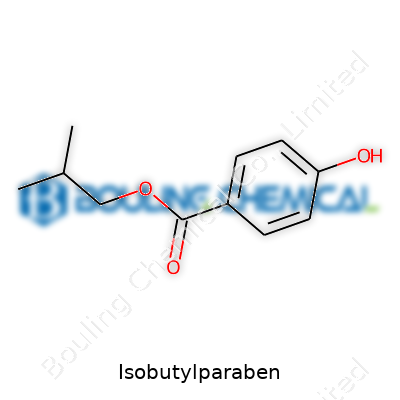
From a chemical manufacturing perspective, isobutylparaben brings manageable challenges. It doesn’t suck moisture from the air like some salts, nor does it volatilize under routine indoor conditions. Melting points hover above 70°C, sweet for storage and transport. Its molecular structure—an isobutyl group linked onto the familiar paraben scaffold—gives slightly better solubility in alcohols than methyl- or ethylparaben, with mild solubility in water. We keep an eye on pH, since slight acid or alkaline conditions can trigger hydrolysis, breaking the molecule down into less useful forms. From a risk standpoint on the floor, dust generation gets controlled at every step: inhalation exposure isn’t healthy, and the dust collects if ignored. Granules or compacted flakes now see the most demand for safety and ease of processing.
Technical Specifications & Labeling
Across our lines, specifications get set not only by regulators but by the expectation of downstream formulators. Purity consistently exceeds 99 percent by HPLC, as any less would draw rejections all along the value chain. Key impurities and related esters get tracked batch by batch, reported in technical documentation. Heavy metal limits sit far below most national standards, and residue solvents undergo routine tracking, especially now with regulatory lists expanding year on year. Labeling conventions have gotten stricter, especially for export drums. Every container needs to show not just the CAS and common product names but must match traceability markers demanded by pharmaceutical and cosmetic suppliers. Barcoding, batch numbers, and comprehensive documentation help our clients through their own audits.
Preparation Method
Our core process has changed since manual chemistry days but builds on the classic Fischer esterification. Para-hydroxybenzoic acid reacts with isobutanol under acid catalysis—sulfuric acid still puts in steady work. Reflux, then distillation drive off excess alcohol and water. Over years, we’ve switched from open reactors to sealed, temperature-controlled systems, reducing energy requirements and sharpening yields. The crude ester gets neutralized, washed, and crystallized repeatedly. Each equilibrium tweak or solvent swap can cut out days from the process or shave down byproduct concentrations. Large-scale runs place a premium on solvent recovery and handling, both for safety and operational cost. Where regulatory burdens climb, we add further polish through activated carbon filtration or recrystallization, balancing throughput and purity every shift.
Chemical Reactions & Modifications
Isobutylparaben’s chemistry isn’t as reactive as some of the raw acids or alcohols, which keeps shelf life respectable. Hydrolysis represents the single biggest threat—high pH or enzymatic action can snap the ester bond. Modifications have focused mainly on chain length adjustments or ring substitutions, each built to target new antimicrobial niches or satisfy shifting toxicology debates. Some recent research pushes for smart modifications to reduce endocrine disruption, especially with mounting scrutiny in Europe and North America. From our standpoint, scale-up of new derivatives—once bench data arrives—moves carefully. Each tweak in process chemistry can double or treble the analytical burden, testing for unwanted byproducts or lower-grade material.
Synonyms & Product Names
On invoices and documents, isobutylparaben may hide under names like 4-hydroxybenzoic acid isobutyl ester or isobutyl p-hydroxybenzoate. Historically, batch sheets listed the material under older pharmacopoeial codes or as “ester of para-hydroxybenzoic acid,” a throwback to European and Japanese standards. Customers rarely settle for vague terminology now, and we keep global and local terminology side by side—helping partners interpret REACH dossiers and crosswalks from US to Chinese regulations.
Safety & Operational Standards
The push for improved operational safety has redefined our workspaces. Dust suppression and explosion-proofing matter, but so does chemical hygiene for the teams handling and weighing powders day after day. Our upgrades range from downdraft tables to personal respiratory protection and strict exclusion of food and drink near active process lines. Training gets updated each year, matching manufacturers’ own evolving understanding of chronic exposure and acute symptom reporting. Waste and spill protocols receive annual drills. Scrutiny from customers and regulators brought tighter batch documentation, record maintenance, and periodic updates to permissible exposure levels. We collaborate with local regulators and multinational assessment teams, sharing monitoring results and incident reports to contribute to broader chemical safety efforts.
Application Area
Demand for isobutylparaben lands strongest in personal care and cosmetic products—creams, lotions, hair care, sometimes pharmaceuticals where a broad-spectrum preservative holds value and the safety profile fits regulatory lines. End users appreciate a preservative that backs up shelf stability without shifting texture or aroma. In some countries, regulatory caps on paraben total concentration drive technical discussions with clients, with frequent reformulation rounds ensuring compliance. Use in food applications faded long ago under restrictive listings, but animal health and niche crop protection still test limited uses. Specialty coatings, adhesives, and some dental materials feature as minor application markets where other preservatives fall short.
Research & Development
Ongoing research orbits around both human safety and advanced formulation compatibility. High-throughput screening accelerates new preservative candidates, but for every breakthrough, manufacturers like us face years of validation before plant-scale trials. Teams collaborate with university labs and industry consortia aiming to find low dose synergy with other antimicrobials, aiming to minimize total preservative load. Analytical equipment improvements—better mass spectrometry and chromatography—let us study trace byproducts, feeding tighter process control. R&D budgets tilt toward modifications designed to reduce regulatory risk while maintaining performance. Development takes time, but collaboration now moves faster with shared data pools and pre-competitive partnerships.
Toxicity Research
No other topic draws as much outside attention as safety studies on parabens, including isobutylparaben. Decades of toxicity reporting led to gradual tightening of allowable concentrations, especially in European and Japanese markets. Investigations into potential endocrine-disrupting effects keep the pressure on—publish a study and the phone rings with questions about applicability. We review all incoming literature, update our own data, and transparently share material safety data with clients and regulatory auditors. Historical studies linked high-dose exposure to hormonal activity in animal models, but modern studies focus on real-world exposure levels, metabolism, and cumulative effects with other preservatives. Audits and customer requests bring a constant review of impurity profiles, supporting safer usage. We commit to continuous oversight and shared progress on novel analytical methods for trace contaminant detection.
Future Prospects
Future outlook for isobutylparaben remains closely linked to regulatory appetite and shifts in consumer sentiment. Alternatives based on natural preservatives pull R&D investment, yet the performance of synthetic solutions keeps them relevant in key applications. We commit to deepening transparency on safety and lifecycle analysis, collaborating with customers seeking greener footprints or biodegradable preservation chains. Modern reactors and continuous processing promise further gains in yield and resource use, reducing both cost and environmental impact. For every headline countering synthetic preservatives, industry must build trust through data, shared risk management, and open innovation. Watching regulations tighten around the globe, we prepare for both reformulation cycles and the next wave of safer, smarter preservative molecules. Factories will adapt alongside scientific consensus, and manufacturing know-how stays central to that progress.
Inside Our Daily Production Lines
At our chemical plant, isobutylparaben runs along the lines every day. We know this preservative as a regular part of production because it does a reliable job protecting formulations from microbes. By stopping fungi and bacteria early, isobutylparaben supports shelf life for cosmetics, creams, lotions, shaving products, and powders. Without it, many of the personal care goods you see on pharmacy shelves would lose stability or spoil quickly.
Isobutylparaben belongs to the paraben family, like methylparaben or propylparaben. These cousins all stop microbial growth, yet each one adds a unique protection profile. Isobutylparaben brings broad-spectrum resistance, especially where bacteria and some yeasts can be stubborn. In practice, formulators add it in low concentrations alongside other parabens to get the preservative mix just right. We adjust process parameters daily to ensure consistent blending; a batch ever so slightly off-spec means a downstream customer complaint or product loss.
Why Personal Care and Cosmetics Rely on This Ingredient
Experience tells us stability and safety run hand-in-hand in the beauty and hygiene sector. Manufacturers like us add isobutylparaben to face powders, eye shadows, and skin creams because regulations demand protection against microbial growth, especially for products handled by fingers. Skipping proper preservation risks much more than short shelf life. Inadequately preserved goods can breed bacteria, posing real problems for end users.
Besides personal care, some pharmaceutical companies use isobutylparaben in topical treatments. Stopping mold and yeast is just as important for ointments and gels kept in humid bathrooms or medicine cabinets. Keeping the active ingredients working as designed relies on defending against microbes.
Facts, Concerns, and Industry Response
Over the past decade, parabens have drawn attention and sometimes controversy. As science reviews new evidence, consumers have raised questions about their health impacts. In response, regulators set safe limits and require evidence-based decisions. The EU has banned isobutylparaben from leave-on products for children under three years old. In the United States, the ingredient remains permitted in cosmetics at specific low levels. Within our plant, every batch undergoes strict purity checks and trace-level verification. We run tests for contaminants, confirming compliance before shipping. Good manufacturing practice doesn’t let us treat questions around safety lightly.
The chemistry behind isobutylparaben has stood up to repeated risk assessments, showing it doesn’t significantly gather in tissues and leaves the body quickly. Still, some makers have started promoting paraben-free alternatives knowing that public perception matters. From our technical side, achieving similar microbial protection with replacements often demands higher doses or more complicated blends—each with their own trade-offs, costs, and environmental impacts.
Working Toward Solutions
We listen to customers weighing tradition against innovation. Where they want classics, we offer technical guidance grounded in decades of know-how. Where demand shifts, our development teams look for substitutes with proven safety. The challenge is real: keep products safe, stable, and affordable, without losing sight of regulatory requirements or consumer trust.
Each time the formulation landscape changes, it drives us to review processes, upgrade analytical methods, and share experience openly. The journey isn’t just about one ingredient. It’s about finding ways to keep everyday products safe and reliable, even as expectations grow more demanding.
A Manufacturer’s Perspective on Isobutylparaben Safety
Production plants see the real face of cosmetic ingredients from workshop floor to shipping dock. Many in the industry keep debating whether isobutylparaben brings an unnecessary risk when used to protect lotions, creams, and other personal care products from bacterial growth. Decades of direct involvement with synthesis, batch testing, and answering regulatory queries tell a pretty clear story: isobutylparaben, like any preservative, raises careful questions that come down to how it’s used, the latest toxicology studies, and strict adherence to regulations.
A cosmetic manufacturer works with parabens because they get the job done for very little cost. Isobutylparaben helps suppress bacteria, fungi, and molds in a broad range of formulations. Products remain safe on the shelf for much longer, which protects both the business and the end user from harm. Cosmetic chemistry without preservatives means risking short-lived or unsafe items that could turn sour before reaching the customer. Still, the debate over parabens, including isobutylparaben, doesn't fade away.
Some government agencies in Europe placed certain parabens on restricted lists. The European Commission’s Scientific Committee on Consumer Safety once reviewed the use of isobutylparaben and assessed possible hormone-disrupting effects. Restrictions do not mean a blanket ban; data did not link isobutylparaben to clear, proven dangers at realistic levels, but authorities flagged a lack of data and asked for tighter controls. Our labs took this to heart, upping the standards on trace analysis and finished product purity. Even small residual solvent levels and batch-to-batch consistency take on extra scrutiny to keep everything compliant.
Industry practice matches regulation. Finished goods containing isobutylparaben in concentrations above permitted limits will not reach store shelves. Batches undergo challenge testing, stability studies, and analytical chromatography in-house long before a compliance officer signs off. As manufacturers, we maintain records to prove levels remain below legal thresholds. For markets that shifted away from parabens, we reformulated with alternatives, though they do not always deliver the same cost or performance.
Misinformation sometimes complicates discussions. Media reports often lump all parabens together. A preservative acts locally in a specific formula; toxicity depends on dose and exposure route. Risk assessment studies focus on repeated, long-term use, not a single application. The consensus across North America and many Asian countries shows isobutylparaben as generally regarded as safe below set limits. Toxicologists keep a close watch, but replacement chemicals also need vetting—many newer “naturally inspired” substitutes have less long-term data.
Where possible, ingredient transparency helps users make choices based on facts instead of rumor. Manufacturers appreciate questions about safety, but value direct testing even more. Strong partnerships with suppliers and regular verification of test results build trust throughout the supply chain. Scientific advances may lead to further changes in the future, but as of today, isobutylparaben plays a clear, regulated, and closely monitored role in cosmetics protection. If the data ever changes, production lines and formulations will change with it.
Understanding Industry Insights
Working right at the source gives a clear view on how ingredients like isobutylparaben actually behave. Inside the factory, we’re hands-on with the chemistry—handling raw material, overseeing reaction vessels, watching every parameter. Quality control teams constantly monitor each batch, and every shipment faces microbiological and allergenic testing. This isn’t routine paperwork; we have a direct stake in people’s safety, our own staff included. So, reports of allergic reactions to isobutylparaben are not taken lightly.
Allergy Concerns From Real-World Use
There are occasional news stories citing allergic responses—redness, itching, contact dermatitis—linked to ingredients like isobutylparaben in cosmetics and topical formulations. Medical literature includes documented cases over the last few decades, mostly in products with high usage rates or in people with skin conditions. The vast majority of users experience no issues, but an allergic or irritation potential does exist, and even low percentages matter when millions use the product. Skincare brands report patch test results back to us, creating a loop of feedback from consumers to the manufacturing line.
What Quality Control Shows Each Day
Every tank we drain, every drum we fill, gets sampled. Technicians evaluate raw material purity, screen for trace contaminants, and run standardized safety checks. These processes, designed with regulatory directives in mind, help ensure the preservative stays within accepted safety margins. Research by clinical dermatologists shows that parabens, including isobutylparaben, rarely rank high on allergen frequency lists. They do not approach fragrance mixes or metals in terms of sensitization rates. Many negative cases arise in those with long-term, repeated exposure, or pre-existing sensitivities.
Weighing Risks and Safety Practices
Through years of overseeing production, it's become clear that keeping concentrations low and purity high mitigates risks for the majority of users. Skin patch testing—conducted both in external clinical trials and in our partner facilities—keeps us aware of changes in allergenic trends. Continuous review of scientific studies lets us compare our own QA findings with published medical data. Regulatory limits exist for a reason and following them pays off in fewer negative reactions on the end-user side.
Communication and Informed Usage
Labelling and formulation transparency play a big role. Manufacturers supply precise concentration data to consumer brands, who list ingredients on their packaging. Dermatologists advise that those with known paraben sensitivity consult ingredient lists or perform patch tests with new products. We communicate any supply changes or updates in usage recommendations promptly to end users. This open approach supports both safety and consumer trust.
Where Solutions Begin
Consulting with formulators to balance preservation and minimize irritants helps prevent unnecessary exposure. Technical teams experiment with potential alternatives, but few substances provide such a reliable preservative effect at low dosages without other unforeseen complications. For users with strong sensitivities, switching to paraben-free lines makes sense. Our responsibility centers on constant review of our processes, open feedback discussions with healthcare professionals, and setting strict purity standards in each manufactured lot. This cycle—real-world feedback, scientific review, practical safeguards—keeps the conversation on isobutylparaben grounded in evidence and real-world experience.
Current Global Status
As a chemical manufacturer with decades spent producing a variety of parabens—including isobutylparaben—I’ve watched regulations shift around this ingredient. Isobutylparaben forms part of a broader class of parabens used as preservatives. These molecules keep everyday products—from skincare lotions to shampoos—from spoiling due to bacteria and mold. Over the past decade, consumer and regulatory eyes have turned sharply toward certain parabens based on their possible role as endocrine disruptors.
Europe’s approach stands out. The European Union started restricting several “long-chain” parabens, including isopropylparaben and isobutylparaben. Back in 2014, Commission Regulation (EU) No 358/2014 prohibited the use of isobutylparaben in cosmetics manufactured and sold in the European market. The scientific committee working with the European Commission concluded that safety data for isobutylparaben left too many unanswered questions, particularly regarding potential effects on hormone systems in young children. Out of caution, they moved to ban it as a cosmetic ingredient.
Japan has set strict maximum concentration limits for parabens, but no outright blanket ban on isobutylparaben specifically. In China, the National Medical Products Administration follows stringent guidelines, and changes sometimes come swiftly after European actions. For isobutylparaben, China currently restricts its use in cosmetics, with pressure mounting for broad prohibition similar to Europe.
Industry Impact and Responsibility
Our production teams responded directly when news of the EU ban hit. We began adjusting formulations and researching alternative preservatives—not just because regulations demanded it, but because end users wanted peace of mind. Some customers still seek isobutylparaben for non-cosmetic applications, pointing to long-term track records for spoilage prevention. These requests demand careful vetting, full documentation, and up-to-date safety sheets.
Science moves faster than law sometimes, and our technical department reads every study released. Parabens, including isobutylparaben, breakdown quickly in the environment and leave little residue, which counts for something in terms of environmental impact. But consumers rarely base trust on environmental persistence alone. Transparency matters more than ever. Manufacturing standards here mean batch-level traceability and third-party testing, so concerns about contamination or impurity rarely come up in regulatory audits.
Consumer Concerns, Alternatives, and Solutions
Large brands in North America and Asia continue phasing out isobutylparaben even where bans do not apply. Public pressure and media coverage drive this change. Fact is, shelf-life and product safety cannot fall by the wayside. Some manufacturers swap isobutylparaben with other synthetic or natural preservatives like phenoxyethanol or sorbic acid. None match the exact blend of broad-spectrum activity or cost that parabens once offered, which forces the whole industry to get creative while maintaining safety.
Switches introduce new challenges. Every substitute brings its own regulatory and supply issues. Our plant operators keep lines separate when changing formulations, and QA staff spends more time verifying that updated blends do not foster microbial growth or irritate skin. Preservative science demands regular revalidation as new ingredients replace older ones.
Looking Ahead
The regulatory stakes for isobutylparaben show no sign of waning. Authorities from the EU to China indicate they will keep tightening rules when data points toward a risk. For manufacturers, the call is clear: keep innovating, keep records transparent, and share safety data. Focusing on ingredient stewardship helps build trust with both regulators and the communities that rely on safe personal care products.
The Chemistry at Work
Isobutylparaben shows up in countless formulations, from personal care products to industrial applications. Over decades, research and direct use have shown that this preservative does its job well. For those of us on the plant floor, it’s clear: it keeps products fresh on the shelf and in your medicine cabinet. Still, it’s fair to ask about the potential side effects, since safety sits at the core of any responsible manufacturing process.
Side Effects: What We’ve Learned Through Practice and Study
Most people use products containing isobutylparaben without any issue. That said, not every skin type or immune system reacts the same way. Our technical staff have seen reports of skin irritation or allergic response, mostly in individuals with known sensitivities. These cases tend to show up as redness, mild swelling, or itching after direct skin contact. The underlying cause appears linked to a personal allergy to parabens, and it tends to resolve after switching to an alternative product.
Our safety data sheets and in-house monitoring track reports from industrial and consumer applications. Cases remain relatively rare compared to the volume of use, but we never ignore any trend or customer concern. Manufacturers keep batch records and lot samples, so whenever a side effect gets logged, there’s data to go back and investigate.
The Bigger Conversation: Endocrine Activity Concerns
A steady stream of academic research focuses on the potential for isobutylparaben and related compounds to behave as weak endocrine disruptors. Some studies on animals have reported mild estrogenic effects at high exposure levels, far above what humans would typically encounter in finished goods. It makes sense to keep an eye on ongoing research, although the global regulatory consensus so far allows for controlled use in cosmetics and pharmaceuticals at limited concentrations. Europe and North America have both reviewed available safety data several times over the last ten years.
From a manufacturing perspective, the central issue comes down to maintaining correct dosing. Automated systems at the plant add isobutylparaben according to strict tolerances. Any deviation will flag for rework or rejection — there’s no room for shortcuts when health concerns sit on the table.
Addressing Safety: Testing and Transparency
Manufacturers who work directly with parabens rely on extensive in-house and third-party assessments. Every new batch gets routine analysis for impurities, and we maintain long-term monitoring of employee health and product complaints. Good recordkeeping gives us a toolbox for tracing any potential issues to their source. Where regulatory bodies ask for additional labeling or exposure limits, we respond quickly, sometimes moving faster than local requirements.
Our experience tells us that most risk comes from misuse or accidental overexposure. Plant staff use personal protective equipment and get regular safety training. In factories making consumer products, ingredient mixing and packaging all remain isolated and exhaust ventilated. End users should follow recommended usage, especially those with known skin sensitivities or allergies.
Looking Forward: Realistic Solutions
Ongoing development of paraben-free alternatives has picked up steam. Some manufacturers switched formulations for their most sensitive user groups, while others continue to use isobutylparaben at minimum effective concentrations. We support customer transparency by supplying detailed ingredient disclosures and clear safety information. Regular support for new research, smart monitoring, and a willingness to reformulate when necessary form the most practical path toward continuous improvement.