Sodium Butylparaben: Insights from a Chemical Manufacturer
Historical Development
Sodium butylparaben traces its roots back to the twentieth century, a time when chemists explored alkyl paraben esters for their preservative effects. Once methylparaben and propylparaben took hold in pharmaceutical and cosmetic preservation, research shifted to alternative alkyl chains, including butylparaben, for broader-spectrum antimicrobial activity. Sodium salts appeared as companies and consumers demanded ingredients that dissolved rapidly in aqueous bases. Those gains came with a keen focus on solubility, extended shelf-life, and regulatory compliance. Decades spent monitoring microbiological stability in food and personal care drove attention toward preservatives with consistent performance and cleaner labels. Sodium butylparaben, rising out of this work, featured improved solubility over neutral butylparaben, helping formulators in everything from creams to solutions. Our team, hands-on in pilot and commercial scale-ups, has watched the transition: sodium salts now offer the usability older forms lacked, especially for production lines requiring dust-free, homogeneous incorporation.
Product Overview
In practice, sodium butylparaben serves both as a trusted preservative and as a stabilizer in countless formulations, from lotions and shampoos to oral care and pharmaceuticals. The compound prevents microbial spoilage, extending product longevity, reducing waste, and making logistics more predictable. Our batches typically show fine, white to off-white powder, with a near-neutral odor and a modest taste profile, allowing compatibility with fragrance or flavor-driven applications. Clients look to sodium butylparaben for its balance of antimicrobial power and solubility, solving headaches linked to stubborn actives that don’t dissolve at room temperature. Our production lines emphasize purity and consistency, recognizing that even the slightest deviation could shift pH balance or physical feel and, in regulated markets, lead to unwelcome scrutiny.
Physical & Chemical Properties
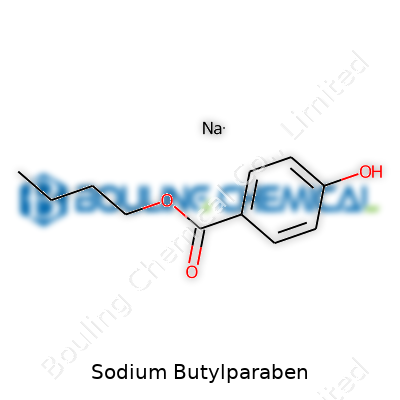
Sodium butylparaben stands out with a molecular formula of C11H13NaO3 and a molar mass around 216.2 g/mol. That single sodium atom, attached as the salt of the carboxyl group, transforms a relatively oily ester into a finely dispersible, water-friendly compound. Crystalline by nature, it melts at modest temperatures, rarely caking during storage. The sodium salt’s solubility in cold and warm water launches it ahead of the free ester, especially for surfactant-heavy and water-rich bases. The compound resists decomposition under routine formulation conditions but, like all parabens, succumbs to hydrolysis under prolonged high-alkaline exposure. Our labs routinely test pH, solubility, and moisture content—not just for internal checks but because subtle drifts over multiple shipments can frustrate production teams on the customer side.
Technical Specifications & Labeling
Specification sheets for sodium butylparaben run deep: assay as sodium butylparaben, heavy metal limits, clarity of solution, pH of 1% aqueous solution (usually about 8.5) come standard. Particle size, moisture content, and absence of known impurities like p-hydroxybenzoic acid take prominence, especially where downstream blending and dosing precision matter. Finished lots carry traceable batch coding, a discipline rooted in pharmaceutical manufacturing and now standard across personal care and specialty chemicals. Analytical techniques—HPLC, FT-IR, titration—support our releases. Labeling stays clear and direct: INCI names, CAS number (36457-20-2 for the sodium salt), safety pictograms if hazards feature at shipping concentrations, and expiration dating established by real-time and accelerated stability testing. Label transparency has only sharpened as cross-border commerce and ingredient disclosure laws become stricter.
Preparation Method
Manufacture begins with p-hydroxybenzoic acid, converted to butylparaben by esterifying with n-butanol, a process catalyzed by acids and followed by neutralization and purification. The transformation from butylparaben to its sodium salt happens with sodium hydroxide or sodium carbonate in controlled pH and temperature, supporting a clean conversion with limited hydrolysis. In our reactors, agitation speed, solvent choice, and temperature calibration can spell the difference between quick turnover and product loss. Filtration and drying techniques refine the yield. We run continuous quality control, scanning for unreacted esters and checking for sodium residue—especially relevant for low-ionic or aerosol-bound applications, where even trace mineral salts can irritate equipment or end users.
Chemical Reactions & Modifications
Sodium butylparaben, while stable in finished formulas, offers ground for further chemistry in skilled hands. The phenolic hydroxyl group enables etherification or sulfonation—routes that sometimes create bespoke preservative chemistries for niche performance requirements. In laboratory settings, alkaline hydrolysis cleaves the ester to produce p-hydroxybenzoic acid and butanol, a pathway relevant both in analytical tests and during environmental break-down. Oxidative conditions, often rare under real-world storage, degrade the aromatic ring, prompting our labs to simulate worst-case scenarios as part of stability and shelf-life investigations. These tests reveal limits and guide bulk handling protocols.
Synonyms & Product Names
On paperwork and supply chain documents, sodium butylparaben appears under synonyms like “sodium p-butyl parahydroxybenzoate,” “sodium butyl 4-hydroxybenzoate,” or—per INCI naming—“Sodium Butylparaben.” International shipments sometimes reference E codes or local pharmacopeial tags. Internal process documentation uses short-hand but always aligns with formal nomenclature once shipments cross audit or customs gates. End-user packaging occasionally lists both paraben and sodium salt forms, partly for legacy reasons and partly due to varying regulatory frameworks across regions.
Safety & Operational Standards
In manufacturing, worker safety surrounds every batch—containment, mask and glove protocols, industrial ventilation, and strict batch-traceability. Bulk storage takes careful temperature and humidity monitoring to prevent caking and preserve flowability. Downstream, personal care and food markets impose their own purity and trace-residue standards. Compliance teams track Country of Origin, allergen, and GMO status. Our operations follow REACH, FDA, and other applicable standards; deviations draw rapid corrective action. In the lab, we map microbial loads, certify absence of pathogenic bacteria, and apply root-cause principles in any deviation, large or small. Environmental controls—wastewater pH balancing, spill reporting, solvent recovery—run parallel to process control. All of this work responds directly to consumer health, regulatory confidence, and the economic drive toward zero-defect shipments.
Application Area
Most sodium butylparaben leaves our plant destined for personal care: creams, lotions, liquid washes, sunscreens, and wipes. The balance ships to oral hygiene, food packaging adhesives, and select veterinary products. Microbiological risk profiles determine dose, but so do national laws; we advice formulators to stay well inside published thresholds, with clear documentation in every lot’s Certificate of Analysis. Customers rely on the compound for yeast and mold inhibition, even when other preservatives such as parabens, phenoxyethanol, or benzoates fall short. Solubility in water-heavy bases counts here, removing the need for high-energy mixing or co-solvent addition. Smaller runs supply research and assay markets, supporting reference materials or custom preservation studies. Interest has also grown from surfaces and textiles looking for durable, low-odor antimicrobial treatments.
Research & Development
In our R&D division, the push rarely stops at existing products. Solubility, skin compatibility, and product life cycle assessments bring a steady stream of internal and client-driven inquiries. Experimental work continues on blends—sodium butylparaben paired with organic acids, chelating agents, or antioxidants—to reduce overall loadings without compromising microbial integrity. Analytical development sharpens tools for trace impurity detection, and formulation scientists actively explore new delivery systems such as encapsulation or polymer-bound preservative particles. Team members examine opportunities for plant-sourced feedstocks, potentially reducing reliance on fossil-based chemical building blocks. Collaborations include toxicology teams, junior researchers, and regulatory advisers, forging improvements in safety, application, and end-of-life environmental impact.
Toxicity Research
Debate around paraben safety continues across regulatory, academic, and consumer circles, and sodium butylparaben undergoes continual review as a result. Toxicological studies show the compound has low acute toxicity, with established NOAELs (no observed adverse effect levels) in animal feeding and dermal studies, guiding safe use levels in both food and cosmetics. Concerns about endocrine disruption stem primarily from longer-chain parabens, but all esters are subject to enhanced scrutiny. Our safety and regulatory teams collate decades of external and in-house studies, answering due diligence audits and regulatory submissions. Risk assessments incorporate skin absorption, systemic exposure, and metabolic pathways, weighed against actual market concentrations. Our engagement with sector working groups keeps us abreast of ongoing research, assuring downstream customers of up-to-date hazard evaluations.
Future Prospects
The next phase for sodium butylparaben lies in maintaining function while responding to demand for “clean” and “green” preservation. Planet-aware markets place growing pressure on chemical origin, energy use, and environmental persistence; regulators study aggregate exposure. Process optimization focuses on minimizing waste, capturing solvents, and designing formulations that limit overuse. Technical innovation is turning from mere solubility enhancement to tuned-release systems, where preservatives remain locked until microbial challenge occurs. Efforts also target improved compatibility with bio-based and biodegradable matrixes, so personal care and food packagers maintain their shelf-life guarantees. With each wave of regulatory or market challenge, sodium butylparaben’s legacy of reliable, cost-effective microbial protection pushes us to innovate, document, and deliver with greater transparency and precision.
What Drives the Use of Sodium Butylparaben
From our manufacturing floor, the demand for sodium butylparaben remains steady among formulators working in cosmetics, personal care, and certain pharmaceutical products. Preservatives face scrutiny, but their purpose is straightforward: protection against spoilage. Without reliable preservatives, creams and lotions become a breeding ground for bacteria, yeasts, and molds. The cost isn't just in wasted inventory—contamination erodes consumer trust and poses real risks.
Sodium butylparaben stands out for its blend of performance and stability. Some clients ask why not switch entirely to “natural” alternatives. The science tells the story. Purely botanical antimicrobials sometimes break down or lose activity inside water-based formulas. They rarely deliver the shelf life customers expect for lotions or shampoos sitting in a humid bathroom. In contrast, sodium butylparaben holds up well—helping formulas meet shelf-life targets without shifting color, texture, or scent, even after shipping through hot climates.
How Formulators Value Safety and Consistency
Our role as manufacturer puts us on the front line of quality control. Every batch undergoes validated testing for purity and composition. Misconceptions about parabens surface in online debates, but results matter. Regulatory agencies worldwide—such as the U.S. FDA and European authorities—review the safety profiles for cosmetic ingredients. They set strict concentration limits, and sodium butylparaben falls below those cut-offs when used as directed. Our technical team monitors new toxicological research closely. To date, evidence does not point to health risks at the low levels required for preservation.
The compound’s structure grants compatibility with wide pH ranges. It integrates seamlessly into both clear gels and creamy emulsions, so developers don't waste time fighting phase separation or stability failures. Switching from one paraben to another can resolve specific solubility issues. Some chemists favor sodium butylparaben when working with formulations where methyl or propyl parabens don’t dissolve quite as readily in water during processing. Less troubleshooting knocks down costs and speeds up new product launches.
Supporting a Long-Term Approach to Product Safety
Obsolescence happens fast in cosmetic chemistry, so we watch reformulation trends and regulatory proposals. More brands tout paraben-free labels but quietly struggle with recall rates after switching to non-paraben preservatives. Preservative cocktails can help, but testing must go deeper. If a client requests sodium butylparaben-free samples, performance questions often follow: “Why did this new version grow mold just two months in?” That’s our daily reality. Reliable protection hasn’t lost its relevance.
Our facility’s continuous improvement plan stays focused on supplying ingredients that meet traceability and environmental requirements. We invest in methods to minimize residual solvents and reduce any impact on wastewater. Trust comes from transparency and performance in the field, not just technical bulletins.
For anyone standing in a lab or managing a supply chain, sodium butylparaben earns its place because it delivers predictable, broad-spectrum protection. We keep the dialogue going with regulatory agencies and our clients, always ready to adjust. Until an alternative matches the effectiveness and reliability, formulators keep ordering it for a reason: product safety for real-world conditions.
Direct Involvement Shapes Trust
Handling the production of sodium butylparaben every day, we pay close attention to both ingredient safety and how our actions impact the finished product. In all of our batches, we stick to strict quality control processes. Every drum produced meets tight purity standards and traceability protocols—our team logs every lot, cross-checks composition, and monitors every step from raw material to packaged preservative. This is not corporate speak. This is the hands-on reality of chemical manufacturing, especially with preservatives that end up in products for direct skin contact.
Parabens and the Regulatory Landscape
Sodium butylparaben sits in the family of alkyl parabens used to prevent bacteria and mold growth in cosmetics, lotions, and topical creams. Talk about parabens often touches nerves. Some people worry after reading studies or online articles that suggest a link to hormone disruption or allergic reactions. From the production side, we look at both epidemiological evidence and how regulatory bodies approach these concerns.
Health Canada, the US Food and Drug Administration, and Europe's Scientific Committee on Consumer Safety have published official reviews on parabens. Their conclusion: Butylparaben, when used within regulated concentration limits, does not cause harm to the skin or broader health. In our work, the EU limit of 0.14% in ready-to-use cosmetic products is embedded into every batch release check. Regulatory agencies do not draw these lines lightly. They base decisions on peer-reviewed data, animal studies, and long-term human exposure evidence.
Worker Safety in Production
We require staff to use gloves, masks, and fume hoods around the raw concentrate, just like with any compound of this class. Finished sodium butylparaben that leaves our facility matches the purity and labeling demanded by global authorities. We also document each shipment, maintain open safety channels, and track incidents to get constant feedback on process improvements. Over years of operation, cases of occupational sensitization or adverse reactions among our workforce remain very rare.
Ingredient Integrity and Downstream Manufacturing
We work with customers ranging from skin care startups to household brand formulators. Our lab fields questions nearly every week about the perceived risks and label claims. No batch leaves our QC floor without a full certificate of analysis spelling out content and impurities. From our vantage point, real risk comes from improper use—levels above established guidelines, or careless blending with known irritants. We actively consult with partners, especially those pushing for all-natural branding or hypoallergenic claims, to help them select the right preservation system for their product and regulatory market.
A Science-Minded Path
Media and public perception change how ingredients are viewed, but in the background, our responsibility never shifts. We rely on data. Round after round of stability, patch, and irritation tests run before an ingredient lands in a finished formula. If new studies or regulations alter the accepted limits, we revamp procedures and reformulate as needed. Preservative safety never stays still. The only way forward is staying responsive, supporting transparency, and backing up every claim with analyzable results and regulatory cooperation.
Practical Observations from a Chemical Manufacturer
Every mixer understands the value that preservatives like sodium butylparaben bring to personal care and pharmaceutical formulas. Our own production lines have run this compound through rigorous applications for years, and its reliability in prolonging shelf life can’t be denied. Yet, questions often come our way about possible side effects, sometimes sparked by news stories or customer inquiries after reading the latest online discussion.
Concerns about skin exposure, allergies, and hormonal disruption top the list. In the real world, pure sodium butylparaben, like many other preservatives, does carry the potential to irritate sensitive skin types. We have witnessed batches being recalled by downstream brands because a very small percentage of end-users reported redness, itching, or swelling after repeated contact. These reactions rarely show up in most people at the low concentrations our customers use in creams and lotions, but the risk can’t be ignored—especially for those who already have sensitivities.
Endocrine disruption is a hot topic in personal care. Multiple studies on parabens, including butylparaben, point toward weak estrogenic effects in laboratory tests, particularly when concentrations far exceed those found in actual products. Daily operations have taught us that sticking to safe regulatory limits set by the EU, US FDA, and Japan’s MHLW prevents real-life problems. We consistently conduct in-house analysis and share third-party data to assure our clients we’re staying far below those limits. Even so, as demand for “paraben-free” products grows, we see more formulators switching to alternative preservatives, sometimes replacing parabens with newer compounds that come with their own sets of unresolved questions.
From the factory floor, side effects sometimes take unexpected forms. Workers who handle raw sodium butylparaben powders—without proper gloves or masks—might cough or have temporary respiratory discomfort. Proper air extraction and protective gear manage these risks effectively. Our internal monitoring over the years hasn’t turned up chronic issues among staff who follow safety protocols. Training and enforcement matter more here than any change in chemical composition.
Overdosing formula with sodium butylparaben for “extra safety” never pays off. Besides regulatory concerns, excessive load can alter product texture and raise the chance that final users react with mild dermatitis. Smart formulation and consistent quality checks replace guesswork and keep finished products well within safe operating windows. The rare batch that deviates in paraben concentration gets reworked before it gets anywhere near a shipment truck.
A manufacturer’s view always ends up shaped by day-to-day realities rather than rumors or isolated incidents. Yes, sodium butylparaben can cause issues if ignored or misused, but extensive experience on the production side proves that hazards stay controllable with the right oversight, transparent testing, and respect for regulatory borders. We maintain direct conversations with downstream partners so no one relies on uncertainty. That means continuous assessment of raw material quality, updated staff training, and well-maintained documentation that keeps risk in check and customers satisfied. The focus never shifts from responsible use and continual improvement, as both are woven deep into our factory’s routine.
Looking at Sodium Butylparaben in the Cosmetics World
Anyone following cosmetics regulation knows that not every paraben moves freely across borders. We have decades of experience producing preservatives for the personal care industry. When customers ask about using Sodium Butylparaben in new cosmetic formulas, clarity matters—especially as markets get stricter about ingredient lists and consumer safety. Sodium Butylparaben belongs to the paraben group, commonly recognized for their antimicrobial properties, especially against fungi and some bacteria.
If you look into regulatory approvals, Sodium Butylparaben faces a complicated landscape. In the European Union, only a handful of parabens maintain approval for cosmetic use. Sodium Butylparaben isn’t among them, due to the stringent approach taken after the SCCS (Scientific Committee on Consumer Safety) raised concerns over some longer chain parabens and their salts. The current annex of the EU Cosmetics Regulation lists ingredients such as Methylparaben and Ethylparaben with concentration limits, but skips Butylparaben’s sodium salt entirely. Manufacturing for the European market, therefore, does not include Sodium Butylparaben for leave-on or wash-off personal care goods. Our experience shipping to countries under EU alignment confirms that customs detain shipments or issue warning letters if a product contains this compound.
The picture is similar in other major markets. ASEAN countries typically follow the EU list, so formulations crossing from Europe to Southeast Asia face the same limitation. In the United States, the FDA does not directly approve or ban cosmetic ingredients but does act on safety findings and regulatory discretion. Despite the absence of an outright ban, the ongoing scrutiny around parabens—including Sodium Butylparaben—prompts many brands to avoid it to reduce controversy or avoid negative consumer perception. Other regions, such as Japan and China, often align new updates with risk reviews from the EU or their own panels. This keeps demand low in much of the global market.
Why Paraben Regulation Matters to Us
As manufacturers, we watch regulatory movements closely because even a minor change can mean machinery adjustments, raw material source reevaluation, or technical training for lab staff. Recent years have seen many customers approach us for alternative preservatives when they receive feedback from retailers or regulators regarding paraben content. Over time, that shifted our R&D focus toward broad-spectrum blends using phenoxyethanol, organic acids, or approved parabens at low concentrations. Insistence on safer alternatives not only keeps our partners out of legal trouble, but reduces complaints to national consumer bodies.
Safety remains at the core. Scientific debate about parabens revolves around their potential as endocrine disruptors; with Sodium Butylparaben, animal studies led to precautionary action in the EU. We do not see clear evidence pointing to specific harm in humans at low doses, but the call for a higher safety margin grows louder each year. Failures to keep up can cost time and trust, far more than the cost of switching production lines or reformulating a product. When the rules evolve, companies relying on our chemicals rely on our readiness too.
Adapting to the Regulatory Future
Companies planning their launches should know that withdrawals and warnings due to Sodium Butylparaben have led to a shrinking market for this compound. Switching to approved preservatives takes time—product stability trials, new regulatory notifications, marketing updates. We help partners throughout these steps because living with uncertainty hurts everyone along the chain. Museums of banned ingredients tell the story of an industry in motion. Parabens, and specifically Sodium Butylparaben, play a part in that ongoing shift.
Direct Experience from the Production Floor
Sodium butylparaben goes into many consumer and industrial formulations. Sitting in the paraben family, it’s often selected for its antimicrobial activity. Over years of manufacturing, we’ve seen how it shows up in personal care items—lotions, creams, shampoos—or as a stabilizer in certain pharmaceutical and food applications. Safety concerns keep surfacing, especially in markets where consumers are more aware of what goes into products. Most want reassurance about the risk of allergic reactions.
Real-World Evidence and Known Risks
Every batch we manufacture goes through strict quality checks. Still, we get questions from customers and partners about skin irritation or hypersensitivity. The truth: A small section of the population can experience an allergic response to sodium butylparaben, just like other parabens. In clinical literature and reports from dermatologists, cases of contact dermatitis exist, particularly in individuals with sensitive skin or a history of allergies. Over-the-counter allergy patch tests sometimes include parabens. In our experience, the rate of allergy remains low compared to other preservatives, but the possibility never disappears.
The chemical structure of sodium butylparaben, with its butyl and para-hydroxybenzoic acid backbone, gives it certain properties. The same features that help it stop microbial growth can, in rare circumstances, trigger the body’s immune system to respond.
Fact-Based Explanation of Allergic Mechanisms
An allergy to sodium butylparaben usually presents as a red, itchy rash at the application site. Sometimes it involves swelling or blisters. Like many preservatives, it acts as a small molecule hapten, binding to skin proteins and making itself visible to immune cells. Our lab tracks any customer complaints or adverse reports. In rare documented instances, these reactions subside once exposure ends. Follow-up tests can confirm sensitivity to parabens specifically and not other ingredients in the product.
Managing Sensitive Populations and Formulator Choices
People with a history of contact dermatitis or known preservative allergies benefit from careful ingredient label reading. Formularies often rely on patch testing and dermatological review, especially in markets with strict labeling and allergen disclosures. We advise partners to provide clear, accurate ingredient lists, making it possible for end-users to avoid compounds that might potentially bother them. For brands crafting products intended for sensitive skin, completely skipping parabens—including sodium butylparaben—makes sense. Many have already adopted alternative preservatives, though these alternatives can bring other trade-offs in performance, stability, or cost.
Responsible Manufacturing and Transparency
Within our own factory, we keep up with scientific research and routinely stay in touch with regulatory developments. Agencies such as the US Food and Drug Administration and Europe’s SCCS have studied parabens extensively. Safety thresholds exist for good reason, and these guidelines shape our quality control and production protocols.
Trust gets built through openness. We welcome allegations and feedback from both industrial clients and everyday consumers. This constant loop of communication leads to safer, better products and helps us adapt ingredients and processes. Every reported reaction—no matter how rare—matters in keeping confidence high and supporting those for whom even minor sensitivities can be a real challenge.